Dana Keller · 2 November 2026
Mitigating Flood Risks for Flat Roof Skylights in UK Urban Areas
Urban centers across the UK face mounting pressure from intense rainfall events that overwhelm drainage systems, and flat roof skylights represent a frequent entry point for water intrusion when seals fail or ponding occurs around the frames. Data from the Environment Agency shows that metropolitan regions like London, Manchester, and Birmingham recorded elevated flood incidents between 2023 and 2025, with commercial and residential buildings experiencing repeated leakage through overhead glazing units. Researchers at several institutions have documented how climate shifts contribute to these patterns, while building surveys reveal that older skylight installations often lack the elevation or membrane layering needed to divert standing water effectively.
Key Vulnerabilities in Metropolitan Flat Roof Systems
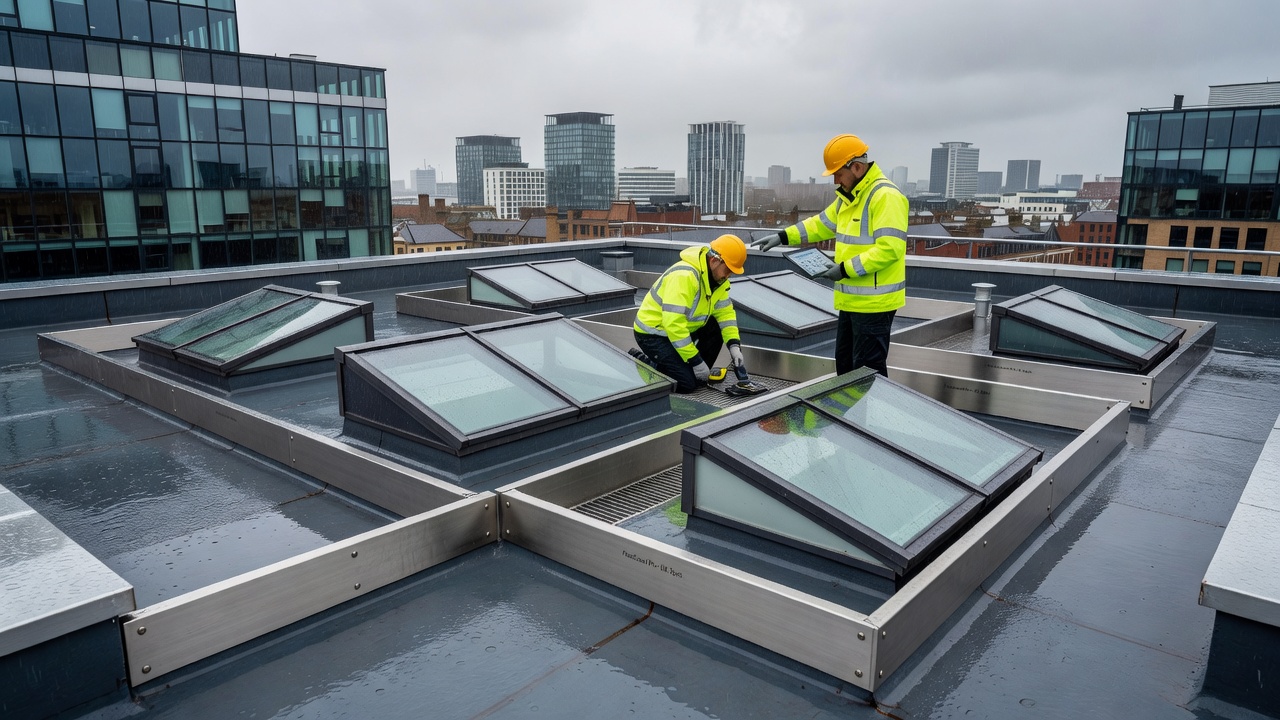
Flat roofs collect water in large volumes during storms because they lack the slope that channels runoff on pitched structures, and skylights create interruptions in the waterproof membrane where flashing meets the frame. Observers note that thermal expansion and contraction in urban heat islands accelerate sealant degradation over time, allowing moisture to seep through joints when rainfall accumulates faster than outlets can handle. Studies indicate that buildings constructed before 2010 show higher rates of skylight-related damage compared with newer builds that incorporate raised curbs and integrated guttering around each unit.
November 2026 marks the scheduled rollout of revised technical guidance from the Ministry of Housing, Communities and Local Government that will require enhanced perimeter detailing for all new flat roof projects in high-risk zones. Those who have reviewed the draft documents note that the updates emphasize continuous membrane coverage and secondary drainage paths that bypass primary outlets during extreme events.
Drainage Enhancements and Structural Adjustments
Engineers commonly specify tapered insulation boards that create subtle gradients directing water toward scuppers or internal drains positioned away from skylight perimeters, and this approach reduces ponding duration while preserving the roof's thermal performance. Additional measures include the installation of raised curbs around each skylight that elevate the glazing above the surrounding surface by at least 150 millimeters, a detail that prevents water from reaching the seal during moderate flooding. Industry reports highlight that combining these curbs with overflow weirs allows excess water to exit the roof before it reaches critical levels around the glazing.
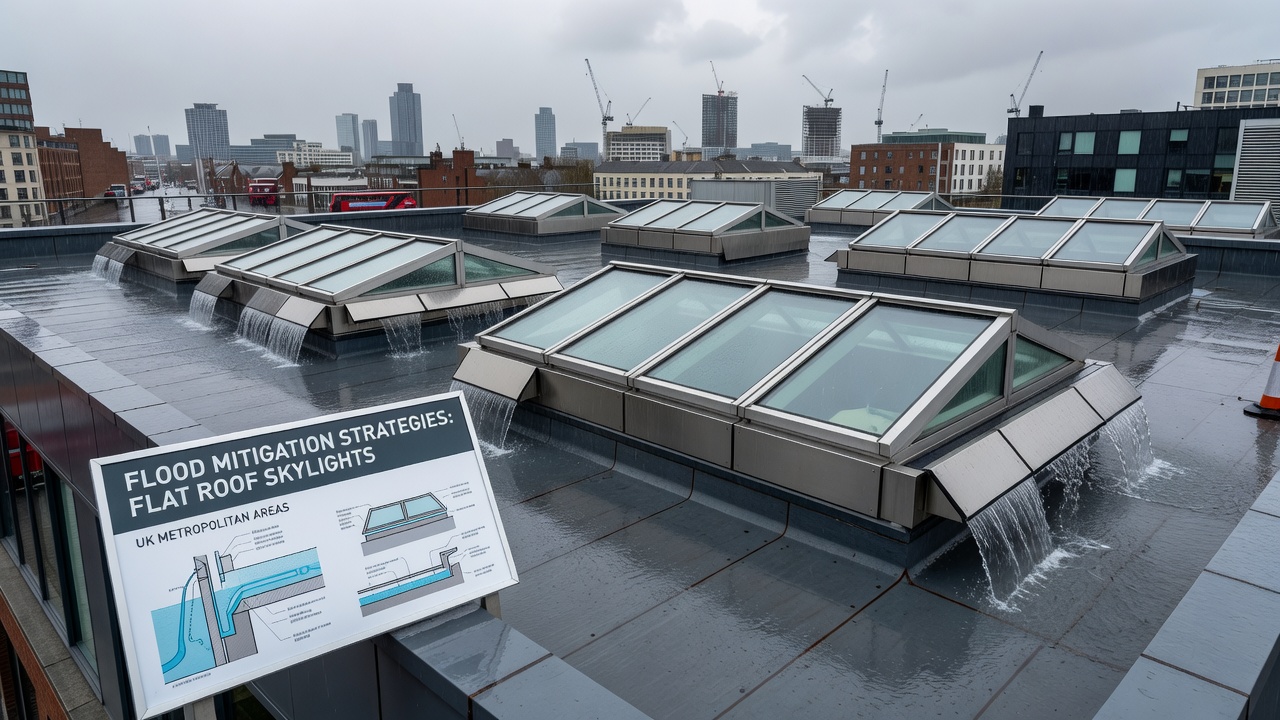
Maintenance teams in several cities have adopted scheduled inspections that clear debris from outlets and check membrane integrity around skylights twice yearly, and data collected from these programs shows measurable reductions in leakage claims when performed consistently. European Environment Agency analyses of similar urban retrofit projects across member states confirm that proactive drainage upgrades deliver the strongest long-term cost benefits compared with reactive repairs after water damage occurs.
Material and Design Innovations
Manufacturers now offer skylight frames with integrated gaskets and thermal breaks that maintain flexibility across temperature ranges, while multi-layer membrane systems wrap the curb and extend beneath the glazing to create redundant waterproof barriers. Research from academic groups in Canada demonstrates that hybrid designs combining liquid-applied coatings with preformed flashings improve performance under prolonged saturation, and UK specifiers have begun incorporating these methods in metropolitan renovation schemes. Observers note that specifying impact-resistant glazing also addresses hail events that sometimes accompany heavy rainfall in summer storms.
Building owners in dense districts often face space constraints that limit the addition of external downpipes, so internal rainwater harvesting systems connected to flat roof drains provide an alternative route for managing volume before it reaches street-level sewers already under pressure during peak events.
Conclusion
Flat roof skylights in UK metropolitan areas require coordinated strategies that address both immediate water shedding and long-term material resilience, and evidence from multiple sources shows that combining raised detailing, secondary drainage, and regular maintenance yields the most reliable outcomes. Updated regulatory timelines arriving in November 2026 will likely accelerate adoption of these measures across new and existing stock, while ongoing monitoring continues to refine best practices for each city’s unique drainage network.